
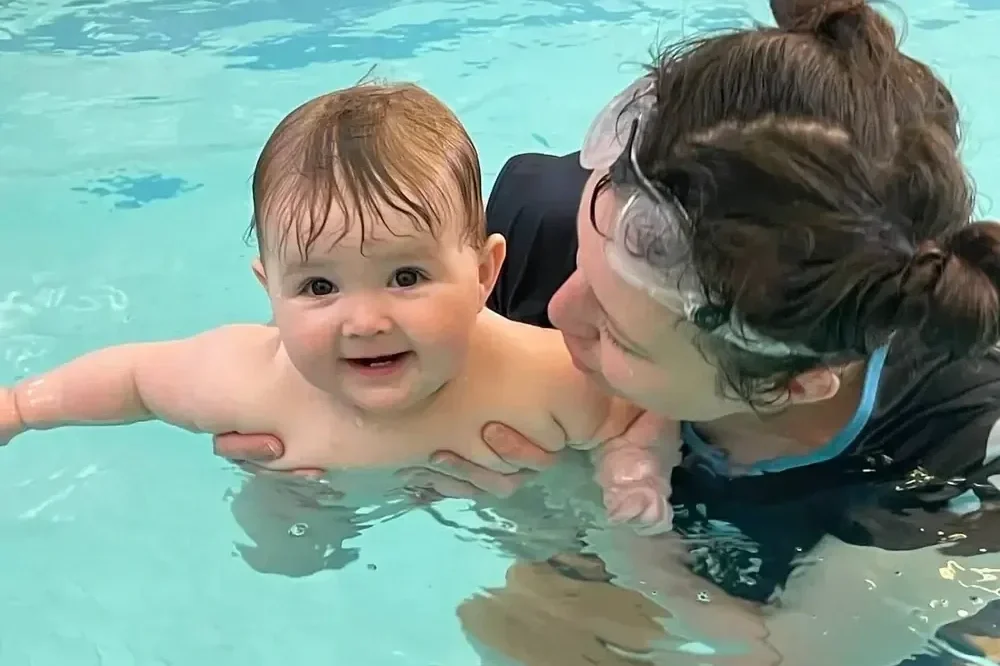
What to do when your child hates going to their swimming lesson?
Is your child afraid of water or nervous about getting into the swimming pool? You're not alone. Many children experience anxiety when learning to swim, whether it's their first swimming lesson, putting their face underwater or simply being in an unfamiliar pool.
The short answer
If your child hates swimming lessons, stay calm, listen to what worries them and never force them into the water. Rebuild confidence with short, playful, pressure-free steps, celebrate small wins, keep lessons consistent and choose a swim school whose teachers let children progress at their own pace.
For some children, the fear may come from a previous negative experience. For others, it may be the unfamiliar feeling of floating, splashing, water on their face or being away from their parents.
At School of Little Swimmers (SOLS), we understand that every child has a different starting point. Our swimming lessons in Adelaide are designed around each swimmer's age, ability and confidence, helping them develop essential swimming and water safety skills at their own pace.
If your child is nervous about swimming, here are eight practical ways you can help them feel more comfortable in the water.
Why Is My Child Afraid of Water?
Before helping your child overcome their fear of swimming, it's important to understand what might be causing it.
Children experience water differently. While some are naturally excited to explore a swimming pool, others need more time to feel comfortable.
Here are some common reasons why a child might be afraid of water:
A previous negative experience: Slipping into a pool, swallowing water or experiencing an unexpected splash can make a child hesitant to swim again.
Fear of putting their face underwater: Getting water in their eyes, nose or mouth can feel uncomfortable or frightening.
Separation anxiety: Some younger children feel nervous when they have to participate in swimming lessons without their parent nearby.
Sensory sensitivities: The sound of splashing, echoes in an indoor pool, water temperature and unfamiliar sensations can feel overwhelming.
Fear of the unknown: Children who have little experience in a swimming pool may feel uncertain about what to expect.
Fear of losing control: Floating, kicking and moving through water can feel unfamiliar, particularly for children who are not yet confident swimmers.
Understanding the reason behind your child's anxiety allows you to provide the right encouragement without making them feel pressured.
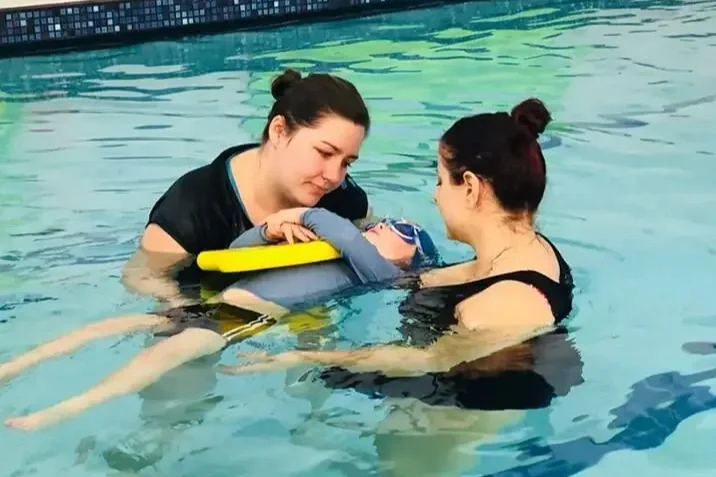
8 Ways to Help Your Child Overcome Their Fear of Swimming
Helping a child become comfortable in the water takes time. Rather than expecting immediate progress, focus on creating positive experiences and celebrating small achievements.
Here are eight ways to support your child's swimming journey.
1. Acknowledge Their Fear and Listen to Their Concerns
The first step is to let your child know that their feelings are valid.
Avoid dismissing their concerns with phrases such as "There's nothing to be afraid of" or "Don't be silly."
Instead, try saying:
"It's okay to feel nervous. We can take our time."
"Would you like to tell me what worries you about swimming?"
"Let's try something small when you're ready."
Listening to your child helps them feel understood and supported.
When children know they can communicate their concerns without being pressured, they may become more willing to explore new experiences.
2. Introduce Water Gradually
You don't need to start with a swimming lesson in the deep end.
Begin with simple activities that help your child become familiar with water.
For example:
Let them play with bath toys during bath time.
Encourage them to touch and splash water with their hands.
Allow them to sit near the pool and watch other swimmers.
Introduce shallow-water activities with appropriate adult supervision.
Let them practise blowing bubbles when they feel comfortable.
Keep each activity short, enjoyable and age-appropriate.
Never force your child to put their face underwater or enter the pool before they are ready. Gradual, positive experiences can help them become more comfortable over time.
3. Make Swimming Fun and Enjoyable
Children often respond better to activities that feel like play rather than structured tasks.
You can introduce simple water activities to make swimming more enjoyable.
Try:
Playing with floating toys.
Singing familiar songs during bath time.
Playing gentle splash games.
Practising simple kicking movements with appropriate support.
Celebrating every new skill they attempt.
The goal is to help your child associate water with positive experiences.
At School of Little Swimmers, we believe swimming should be an enjoyable learning experience. Our supportive teaching approach encourages children to explore new skills while developing confidence in the water.
4. Use Encouraging and Positive Language
The words you use can influence how your child feels about swimming.
Instead of focusing on what they cannot do, acknowledge the effort they are making.
For example:
"You did a great job putting your feet in the water!"
"I love how you gave that a try."
"You're getting more comfortable each time."
"That was a brave little step!"
Remember that progress doesn't always mean swimming independently.
For a nervous child, simply entering the pool, holding the poolside or putting their feet in the water can be a meaningful achievement.
5. Establish a Consistent Swimming Routine
Familiarity can help children feel more comfortable with new activities.
Attending swimming lessons regularly allows children to become familiar with their teacher, the pool environment and the skills they are learning.
Consistency also gives them opportunities to practise and build on previously learned swimming skills.
At SOLS, swimming lessons run year-round because learning to swim is a progressive journey. Each lesson builds on previous skills, helping children develop confidence, technique and essential water safety knowledge.
Rather than rushing through swimming levels, we encourage children to master each skill before moving forward.
6. Lead by Example
Children often learn by observing their parents and caregivers.
If you demonstrate a relaxed and positive attitude towards swimming, your child may become more comfortable exploring the water.
When appropriate, join your child in the pool and demonstrate simple activities such as:
Walking through shallow water.
Gently splashing your hands.
Holding onto the poolside.
Blowing bubbles in the water.
For babies and toddlers, parent-and-child swimming lessons can be a helpful introduction to the aquatic environment.
At School of Little Swimmers, our parent-and-child swimming program welcomes little ones from six months of age, allowing parents or guardians to participate in the water alongside their children.
7. Celebrate Small Achievements
Every child progresses differently, so avoid comparing your child's swimming ability with that of other children.
Instead, recognise their individual achievements.
Your child might:
Feel comfortable sitting beside the pool.
Enter the water without hesitation.
Hold onto the poolside independently.
Put their chin or face near the water.
Practise kicking with support.
Feel more comfortable participating in a swimming lesson.
These small milestones help create a positive learning experience.
Remember, confidence is built gradually. Give your child time to become familiar with each new skill before introducing another challenge.
8. Choose a Supportive Swimming School
One of the most important decisions you can make is choosing a swimming school that understands children's individual needs.
A child who is nervous about swimming may benefit from patient instruction, consistent encouragement and an environment where they feel comfortable asking for help.
When choosing swimming lessons, consider:
Are the swimming teachers experienced in working with nervous children?
Are children encouraged to progress at their own pace?
Does the school consider each child's swimming ability and confidence?
Is the pool environment comfortable and suitable for young swimmers?
Are private swimming lessons available if your child needs additional individual attention?
At School of Little Swimmers, we take the time to understand every swimmer as an individual.
Our boutique swim school in Klemzig, Adelaide, offers personalised swimming lessons in a comfortable indoor heated pool maintained at 33°C year-round.
Our teachers focus on building trust, developing essential swimming skills and helping children feel supported throughout their learning journey.
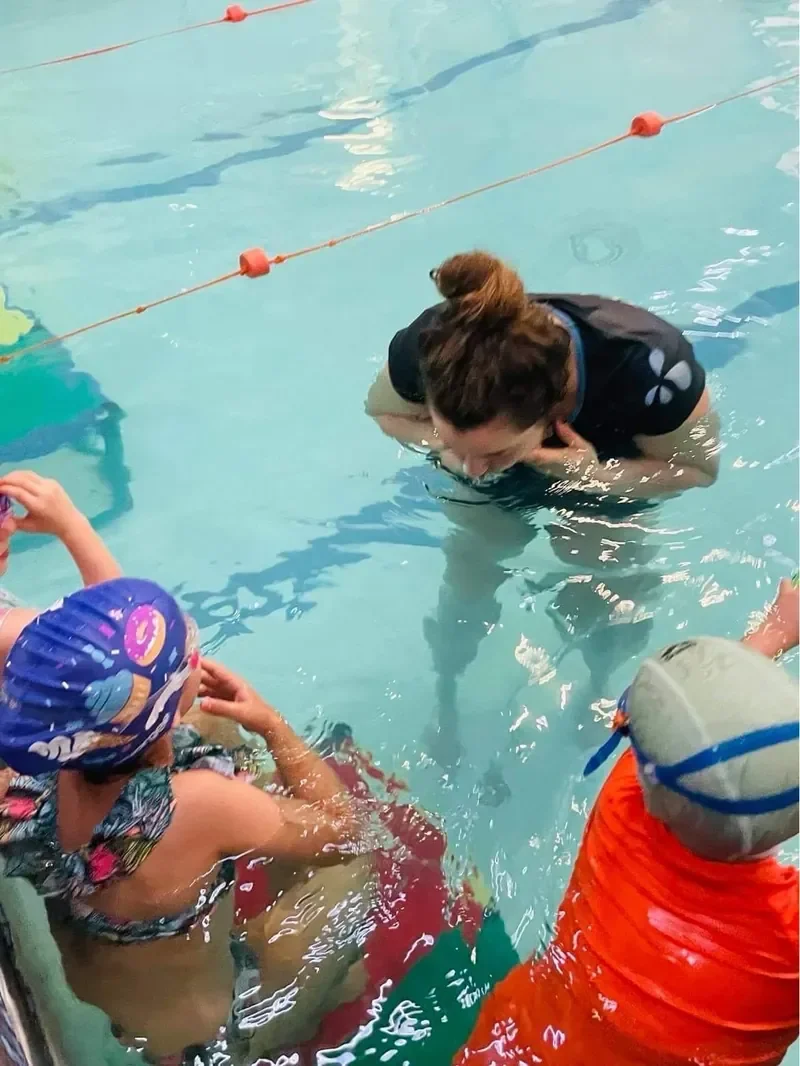
What If My Child Cries or Refuses to Participate in Swimming Lessons?
It's understandable for parents to feel concerned when their child cries, becomes upset or refuses to enter the swimming pool.
However, this doesn't necessarily mean your child will never enjoy swimming.
Some children need additional time to adjust to a new environment, become familiar with their teacher or feel comfortable participating in group activities.
Here are some ways to help:
Talk to the swimming teacher: Explain your child's concerns before the lesson so the teacher can better understand their needs.
Avoid forcing participation: Allow your child time to observe and become familiar with the environment.
Keep expectations realistic: Focus on one small achievement rather than expecting them to complete an entire lesson independently.
Maintain a positive attitude: Reassure your child that learning something new takes time.
Consider individual instruction: If your child needs additional support, ask whether private swimming lessons may be suitable.
At SOLS, we encourage parents to let our team know if their child is particularly anxious before their first lesson. This helps us understand how best to support them from the beginning.
When Should You Enrol a Nervous Child in Swimming Lessons?
You don't need to wait until your child is completely comfortable in the water before introducing swimming lessons.
In fact, a supportive swimming program can provide opportunities for children to become familiar with the pool, develop confidence and learn essential water safety skills.
The right class will depend on your child's age, current swimming ability and comfort level.
At School of Little Swimmers, we offer:
Baby, Toddler and Preschool Swimming Lessons: Parent-and-child classes that introduce little ones to the aquatic environment from six months of age.
School-Age Group Swimming Lessons: Structured swimming instruction designed to develop water confidence, swimming technique and independence.
Private Swimming Lessons: Individualised instruction for swimmers who may benefit from additional attention and a more personalised learning environment.
Our team can help you identify the most suitable starting point for your child.
How do I help my child who is afraid of water?
Start by understanding what makes your child uncomfortable. Introduce water gradually through supervised play, encourage small achievements and avoid forcing them into situations that cause distress. Supportive swimming lessons can also help children become familiar with the pool and develop water confidence.
Why is my child suddenly scared of swimming?
A child may suddenly become afraid of swimming after a negative experience, an unexpected splash, swallowing water or a change in their environment. Sensory sensitivities and separation anxiety can also contribute to swimming-related anxiety.
Is it normal for a child to be scared of swimming lessons?
Yes. Many children feel nervous about swimming lessons, especially when the pool, teacher or routine is new. Fear of water on the face, loud echoes and separation from a parent are all common. With patience and a supportive teacher, most children gradually grow more comfortable.
Should I force my child to swim if they are scared?
No. Forcing a child into the water can increase their anxiety and make future swimming experiences more difficult. Instead, allow them to progress gradually with reassurance and guidance from an experienced swimming teacher.
How long does it take a child to get over a fear of water?
There is no set timeline. Some children settle within a few lessons, while others need several weeks or months to feel at ease. Regular lessons, small goals and plenty of encouragement help, and your swimming teacher can advise on what progress to expect for your child.
Can swimming lessons help a child overcome their fear of water?
Supportive swimming lessons can help children gradually become more comfortable in the water. Experienced teachers can adapt activities to suit each child’s confidence, age and swimming ability.
Are private swimming lessons better for children who are afraid of water?
Private swimming lessons may be beneficial for children who need additional individual attention or find group environments overwhelming. Discuss your child’s needs with the swim school to determine the most appropriate option.
At what age can children start swimming lessons?
Children can start swimming lessons from six months of age. Parent-and-child swimming classes give babies the chance to become familiar with the aquatic environment while developing early water confidence and water safety skills.
Where can I find swimming lessons for nervous children in Adelaide?
School of Little Swimmers offers personalised swimming lessons at its indoor heated pool in Klemzig, Adelaide. Our teachers work with children of different ages and abilities, helping them develop swimming skills and water confidence at their own pace.
Swimming Lessons for Nervous Children in Klemzig, Adelaide
Every confident swimmer starts somewhere. For some children it begins with putting their feet in the water. For others it’s learning to float, putting their face underwater or simply feeling relaxed at a swimming lesson. Whatever your child’s starting point, patience, encouragement and the right instruction can make a real difference.
At School of Little Swimmers, we’re passionate about helping Adelaide families build lifelong swimming and water safety skills in a welcoming, supportive environment. Our indoor heated pool in Klemzig, experienced teachers and personalised approach give children a positive place to learn at their own pace.
Ready to help your child feel more confident in the water? Explore our swimming lessons or contact our friendly team to find the right class for your child.
School of Little Swimmers
274 North East Road, Klemzig SA 5087
Phone: (08) 8460 0095
Email: learn@schooloflittleswimmers.com.au
Contact School of Little Swimmers
